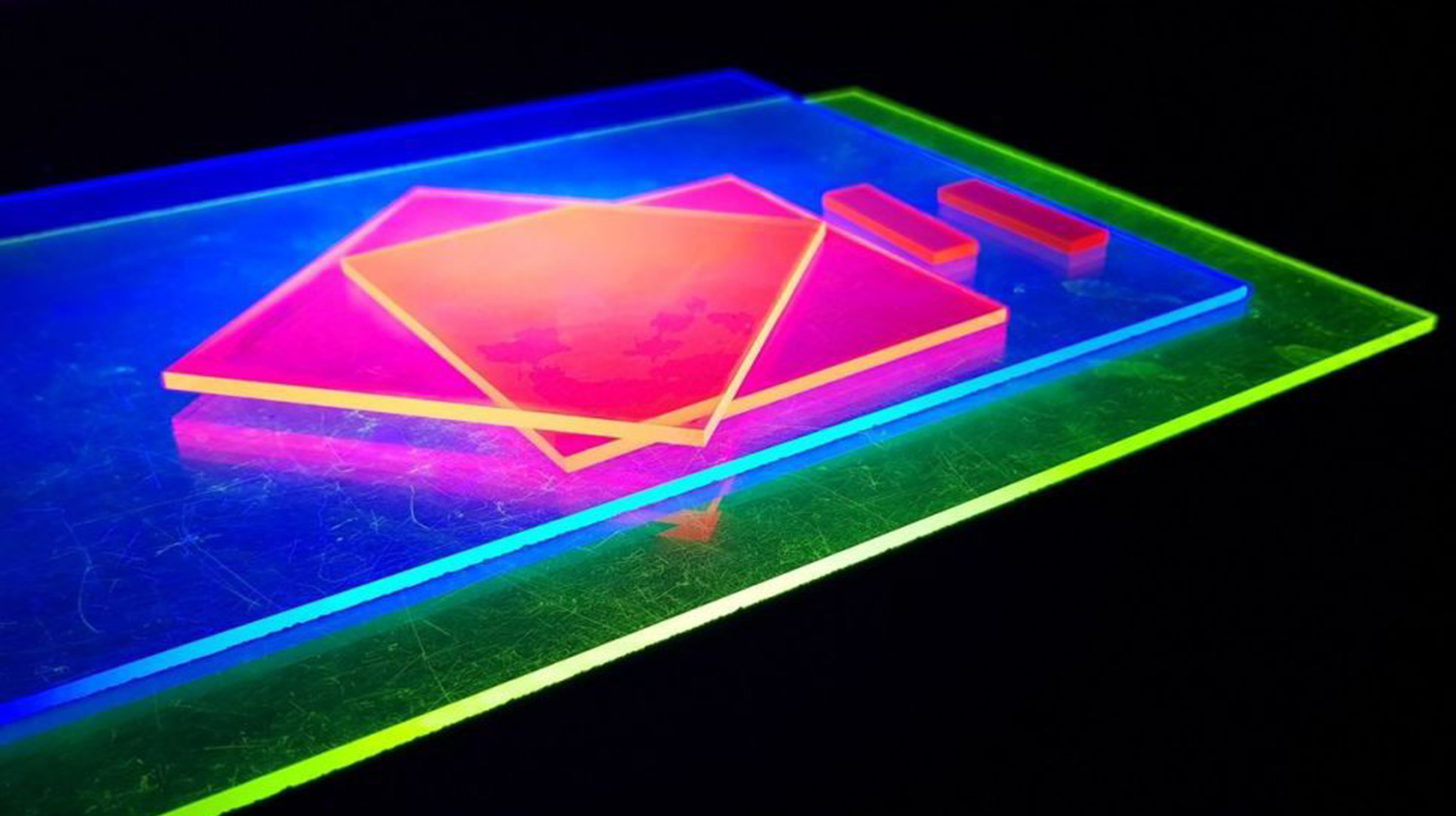
The Centre has a large theory and modelling effort which spans from high level quantum modelling of excitonic properties of materials through to molecular dynamics of self-assembled structures and machine learning applied to materials discovery. It continues to be well supported with large supercomputer resource allocations from the NCI National Supercomputer Facility and the Pawsey Supercomputer Facility. In 2019 we received allocations through the NCI Flagship Allocation Scheme, which awards grants to projects identified by the NCI Board as being of high-impact or national strategic importance. We were also successful in obtaining allocations through the NCI Merit Allocation Scheme and the Pawsey Supercomputing Centre Energy and Resources Merit Allocation Scheme.

Theory and Modelling
The Spectroscopy and measurement capabilities underpin much of the work in the Centre. The measurement of the physical properties of excitons, including energy, lifetime, transport and dissociation is key to the development of new and improved devices. The Centre’s specialist expertise in spectroscopy and optical microscopy allows us to investigate ultrafast exciton generation across the UV, visible and near-infrared spectral regions. We can undertake time-resolved and/or spatially resolved detection of exciton emission (photons), spin-state, transport and exciton dissociation products; and examine single molecule, solution and bulk materials. In 2020 this capability will be further enhanced as centre CIs Smith, Ghiggino and Mulvaney were awarded $755K towards an Ultrafast Laser Spectroscopy Facility in last ARC Linkage Equipment and Infrastructure round.

Spectroscopy and measurement
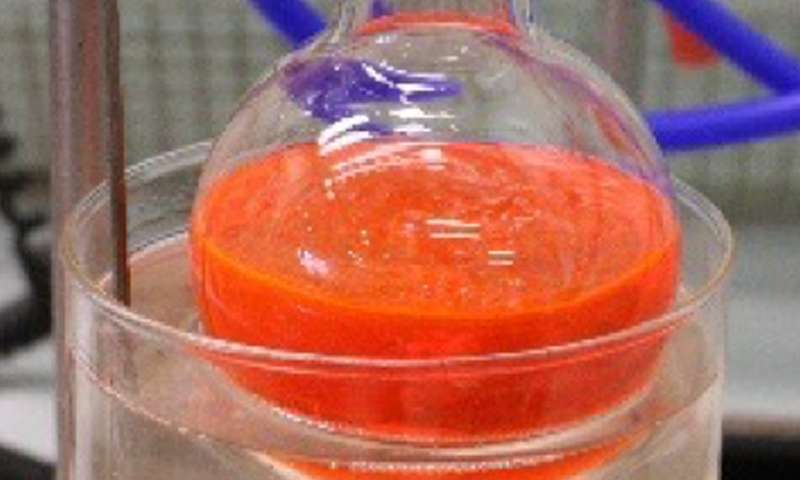
Many of the projects within the Centre require the exploration and synthesis of new materials with enhanced properties. The synthesis capabilities within the Centre are being used to push and expand the current boundaries of synthesis techniques in areas of quantum-confined inorganics, inorganic bulk materials and organic assemblies. The Centre has the capability to produce materials in the three classes – organic conductors, inorganic nanocrystals and perovskite films – at appropriate scale requirements for applications. Current synthesis efforts include the development and fabrication of a series of organic dyes with potential for polariton laser application, highly fluorescent and stable perovskite nanocrystals and organic fluorescent chromophores for solar luminescent concentrators. To facilitate the exchange of information on materials, the Centre has also created a materials register. There are further plans to establish a database of materials and their properties that can ultimately be used in the data mining and machine learning program for high-throughput materials discovery.
Materials and synthesis
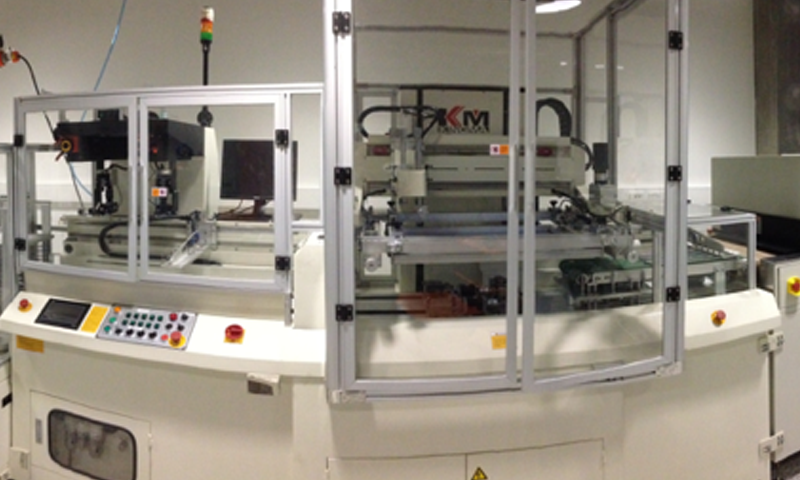
The Centre is working on the development of new energy-efficient devices and energy storage structures such as solar cells, luminescent solar concentrators, LEDs and exciton up-conversion systems. The full application potential of emerging excitonic materials will be showcased and explored in prototype devices. We are also working towards novel device designs that are compatible with low-cost fabrication techniques. The integration of the multitude of excitonic technologies developed by the Centre into integrated third generation photovoltaics, such as tandem solar cells and PV-integrated solar concentrators and upconverters, will be a key focus. In 2019 CI Jasieniak was part of a team that was awarded $550K in the ARC Linkage Equipment and Infrastructure round for an Integrated Functional Printing Facility for Advanced Material Technologies, which will be based at the Monash Node. This facility will aid in the development of a fully integrated small-scale and agile prototyping facility for printing of high-performance solar cells. In addition, the Centre is developing new technologies with our key industry partners, DSTG on chemical sensing, RBA on security devices, and CSIRO on light emitting devices.
Devices and prototyping